ReadySeq
Better samples. Faster surveillance.
Automated sample preparation for broad viral surveillance, beginning with municipal wastewater.
ReadySeq aims to make sample preparation faster, simpler, and less expensive—helping surveillance laboratories recover useful viral information with less manual work.
The problem
Preparing the sample takes too much time and work.
Wastewater can provide valuable information about circulating viruses. But preparing it for sequencing can involve multiple processing steps, separate kits and equipment, and manual transfers. This adds time, labor, and cost.
Useful viral material can also be lost during preparation or obscured by background material. Laboratories need a simpler, more consistent way to prepare samples while preserving the breadth of viral information needed for surveillance.
The concept
Two stages. One standardized workflow.
ReadySeq is a proposed low-cost, automated sample-preparation system for wastewater surveillance.
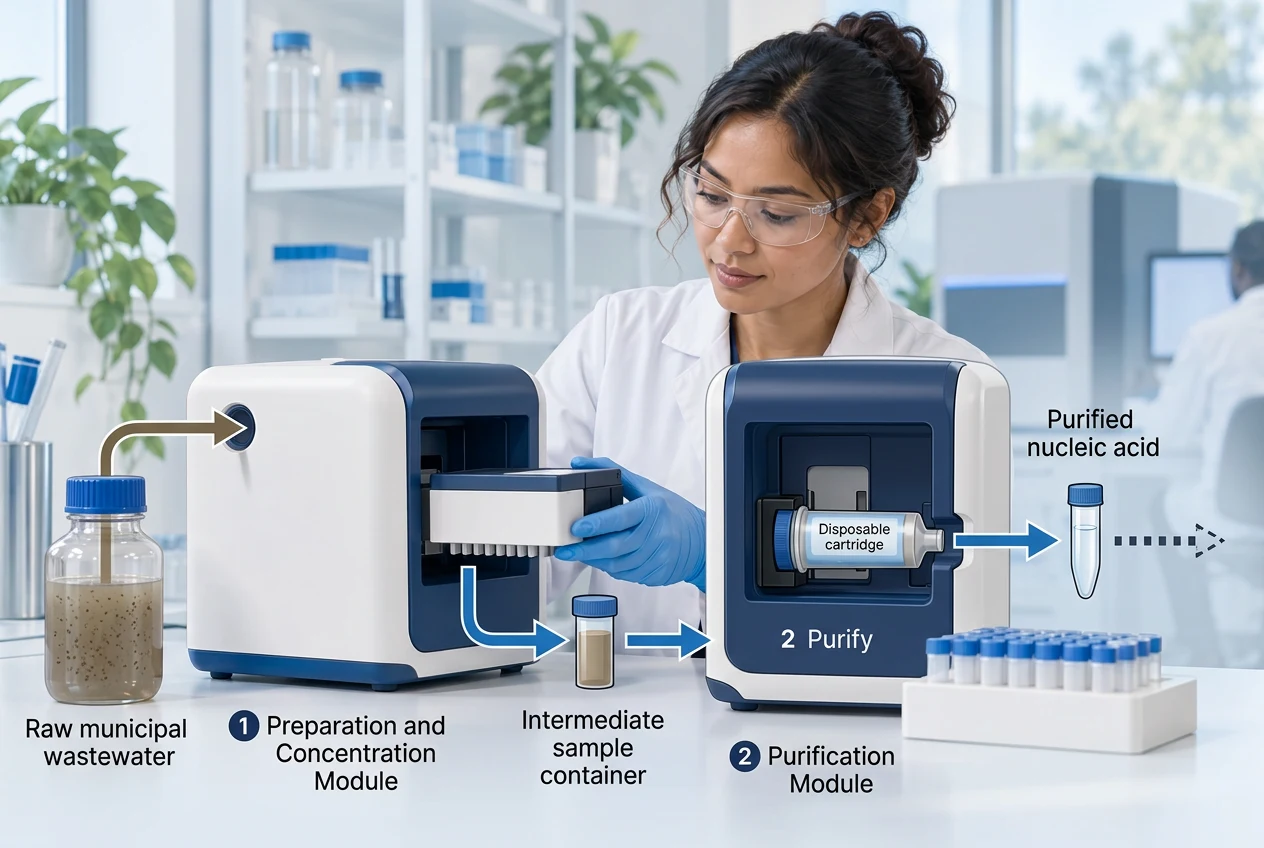
The initial product concept uses two coordinated stages. The first processes raw wastewater, managing large particulates and concentrating viral material into a standardized input. That material is then transferred to a disposable cartridge that automates lysis, purification, inhibitor removal and elution.
The resulting nucleic acid would enter the laboratory’s existing library-preparation and sequencing workflow.
ReadySeq aims to replace multiple kits, instruments and manual transfers with a controlled workflow—reducing preparation time, hands-on work and cost while producing more consistent samples across laboratories.
01
Broad viral recovery
Preserve diverse viral material rather than concentrating only a predefined pathogen.
The workflow would be evaluated across representative virus types and wastewater conditions, including material present in liquid and solid-associated fractions.
02
Standardized, comparable preparation
Use common processing steps, controls and sample-acceptance criteria across laboratories.
The aim is to reduce variation introduced by locally assembled protocols and make sequencing results more comparable across sites and over time.
03
Faster, lower-cost processing
Automate the path from raw wastewater to purified nucleic acid.
The aim is to reduce separate kits, instruments, transfers, hands-on time and failed preparations while remaining compatible with existing library-preparation and sequencing systems.
Why it matters
Make broad surveillance easier to sustain.
The cost and effort of sample preparation can make routine sequencing-based surveillance difficult to sustain. Faster, more affordable preparation could help laboratories maintain a broader view of circulating viruses within limited budgets.
ReadySeq would begin with municipal wastewater, where it must demonstrate value through reduced preparation time, lower cost, and consistent sample quality.
A workflow established in routine use could also support investigation of emerging threats, with preparation methods and quality controls already in place.
Next phase
Define and assess the first preparation workflow.
Acta Labs is defining the product requirements and feasibility program, assessing preparation technologies and how they could be integrated into a consistent, automated workflow.
We welcome laboratory, technology and funding partners interested in developing and evaluating the approach together.